The Power of Recording Yourself: Track Your Musical Growth Over Time
What does liability coverage cover on an auto policy?
It covers the damage and injuries you cause to other people when you're at fault in an accident. It generally has two parts: bodily injury liability (others' injuries) and property damage liability (others' property, like their vehicle). It's the required foundation of an auto policy, protecting you financially from your responsibility to others on the road, up to your policy's limits.
Does liability cover my own car?
No, this is the most common misunderstanding. Liability covers damage you cause to others' property, not your own vehicle. If you're at fault, your liability handles the other party's car, not yours. Coverage for your own car comes from separate coverages (commonly collision and other-than-collision coverage). Having liability alone does not mean your own vehicle is covered after an accident.
Does liability cover my own injuries?
No. Liability covers injuries you cause to other people, not your own medical costs. Coverage for your own injuries comes from separate coverage types (such as medical payments or personal injury protection, depending on the policy and where you live). Like your own vehicle, your own injuries require coverages beyond liability, which is part of why policies include more than just liability.
What are the two parts of liability coverage?
Bodily injury liability and property damage liability. Bodily injury liability covers injuries you cause to other people (the other driver, passengers, pedestrians) in an at-fault accident. Property damage liability covers damage you cause to others' property, most often their vehicle, but also things like fences or buildings. Together they cover the injuries and property damage you cause to others when you're at fault.
Why is liability required but it doesn't cover me?
Because liability exists to cover your responsibility to others, the harm you might cause them, which is why it's typically required to drive. It's outward-facing by design. Protecting yourself and your own vehicle is the purpose of other, separate coverages you can carry. So liability being required ensures others are covered when you're at fault; covering yourself is a separate choice through additional coverages.
If I only have liability, am I covered in an accident?
Only for the harm you cause others when you're at fault, not for your own vehicle or injuries. With liability alone, an at-fault accident would leave your own car repairs and your own injuries uncovered by that policy. That's why many drivers carry additional coverages. Understanding this gap is important, "I have liability" is not the same as "I'm covered for everything."
How do I know what my policy actually covers?
Review it with a licensed insurance agent. Because requirements, limits, and the specific coverages on your policy depend on your situation and your state, an agent can explain exactly what your liability limits are, what other coverages you have or don't, and what your overall protection looks like. This article explains liability in general terms; for your specific policy and decisions, an agent who can look at your situation is the right resource.
Quick Answer: Recording a short "mini-performance" every few weeks, rather than relying on how a passage feels in the moment, is one of the fastest ways to hear real progress and catch problems early. A recording strips away the adrenaline and muscle memory that color how a performance feels while you're inside it, leaving only what actually reached the microphone. Musicians who record consistently can compare a phrase from this month against one from three months ago and hear differences that day-to-day practice makes almost impossible to notice. Audio alone sharpens the ear for tone, timing, and intonation, while video adds posture and hand position to the picture. Either way, the habit turns vague progress into something you can actually point to.
You sit down after a lesson, run through the piece one more time, and it feels good. Clean, even, maybe even a little exciting. Then you play back a recording of that same run-through and hear a rushed measure in the second line, a note that clipped short, a tempo that crept up without you noticing. That gap between how a performance feels and how it actually sounds is the whole reason self-recording works.
Musicians have used this trick for decades, long before phones made it effortless. Gerald Klickstein, author of The Musician's Way, has written that "keen self-listening is central to musical excellence," and that without the ability to hear ourselves precisely, we can't solve problems in practice or perform to the standard we're capable of. A recorder doesn't care how confident you felt in the moment. It only knows what actually happened.
Why Your Ears Lie to You While You're Playing
Every musician runs into the same disconnect at some point: the sound you hear from behind an instrument isn't the sound reaching a listener a few feet away. Vocalists feel this most sharply, since the voice they hear inside their own head, carried partly through bone, never matches what a microphone picks up. But the same gap shows up on piano, guitar, drums, and everything else. You're managing fingerings, reading ahead, and half-listening to the metronome, all at once. There isn't enough attention left over to also judge tone quality with real objectivity.
A recording removes you from that juggling act entirely. Press play back later and you're not the performer anymore. You're the listener. That shift in role is what makes the feedback trustworthy in a way that in-the-moment self-monitoring never quite manages.
The Confidence Trap
A passage that felt rock-solid in the room can sound rushed on playback, and a section you were sure fell apart can turn out to be more together than you thought. Both directions matter. Musicians who only ever judge themselves in real time tend to either overestimate their weak spots or completely miss them, and a recording is the fastest way to find out which one is happening.
What a Recording Catches That Practice Alone Misses
Once the adrenaline of playing is out of the equation, specific problems tend to jump out fast: a rhythm that drags in one spot every single time, a note that goes sharp under pressure, phrasing that flattens out right where it should build. These are the details that get buried when you're focused on hitting the right notes in the first place.
Focus a first listen on a few concrete things rather than trying to judge everything at once. Timing is usually the easiest place to start, since a metronome running underneath the recording will expose any spot where the tempo drifts. Tone comes next, listening for whether a note starts clean or has a scratch, thump, or breath sound attached to it. Intonation matters most on instruments where pitch isn't fixed, like violin or voice, and it's often the single hardest thing to judge accurately while you're the one producing the sound.
Warning: Resist the urge to critique everything on the first listen. Trying to catch rhythm, tone, intonation, and phrasing all at once usually means catching none of them well. Pick one focus area per recording, work through the whole passage with just that lens, then move to the next issue on a separate pass if there's time.
Video adds a layer audio can't touch: hand position, posture, bow angle, breath support visible in the shoulders. One study following six piano students over three weeks found that both audio and video playback improved how accurately students judged their own performances compared to judging with no recording at all, though audio-only feedback held a slight edge for evaluating purely auditory details like tone and dynamics. Video, unsurprisingly, gave a fuller picture overall. Neither format beats the other across the board. They catch different things, which is part of why alternating between the two over time tends to work better than sticking with just one.
Building a Timeline You Can Actually Hear
Progress in music happens slowly enough that it's nearly invisible day to day. Nobody remembers exactly what they sounded like a month ago, let alone six months ago, and that fuzzy memory makes it easy to feel stuck even when real progress is happening underneath.
A recording solves that by creating an actual timeline instead of a felt one. Play back a mini-performance from three months ago next to one from today, and the difference in tone, control, and confidence is usually obvious in a way that memory alone could never confirm. This is where recording stops being a diagnostic tool and becomes something closer to proof. Students who feel like they're barely improving often discover, once they hear an old recording again, that they've come much further than it felt like in the moment.
Set a rhythm, not a rule. A short recording every two to four weeks is usually enough to catch a real trend without turning every practice session into a taping session. Same piece, same short excerpt, same rough time of day if possible, so the comparison actually means something. Keep the files organized by date, even if it's just a folder on a phone, so pulling up "three months ago" takes ten seconds instead of a scavenger hunt.
That timeline matters just as much for a parent watching a young beginner as it does for an adult learner tracking their own growth. A parent who only hears their child's playing live, night after night, can lose the thread of how far things have actually come. Pulling up a clip from the start of the school year next to one from last week gives a much clearer answer than "it sounds about the same to me."
How to Actually Start, Without Overthinking the Setup
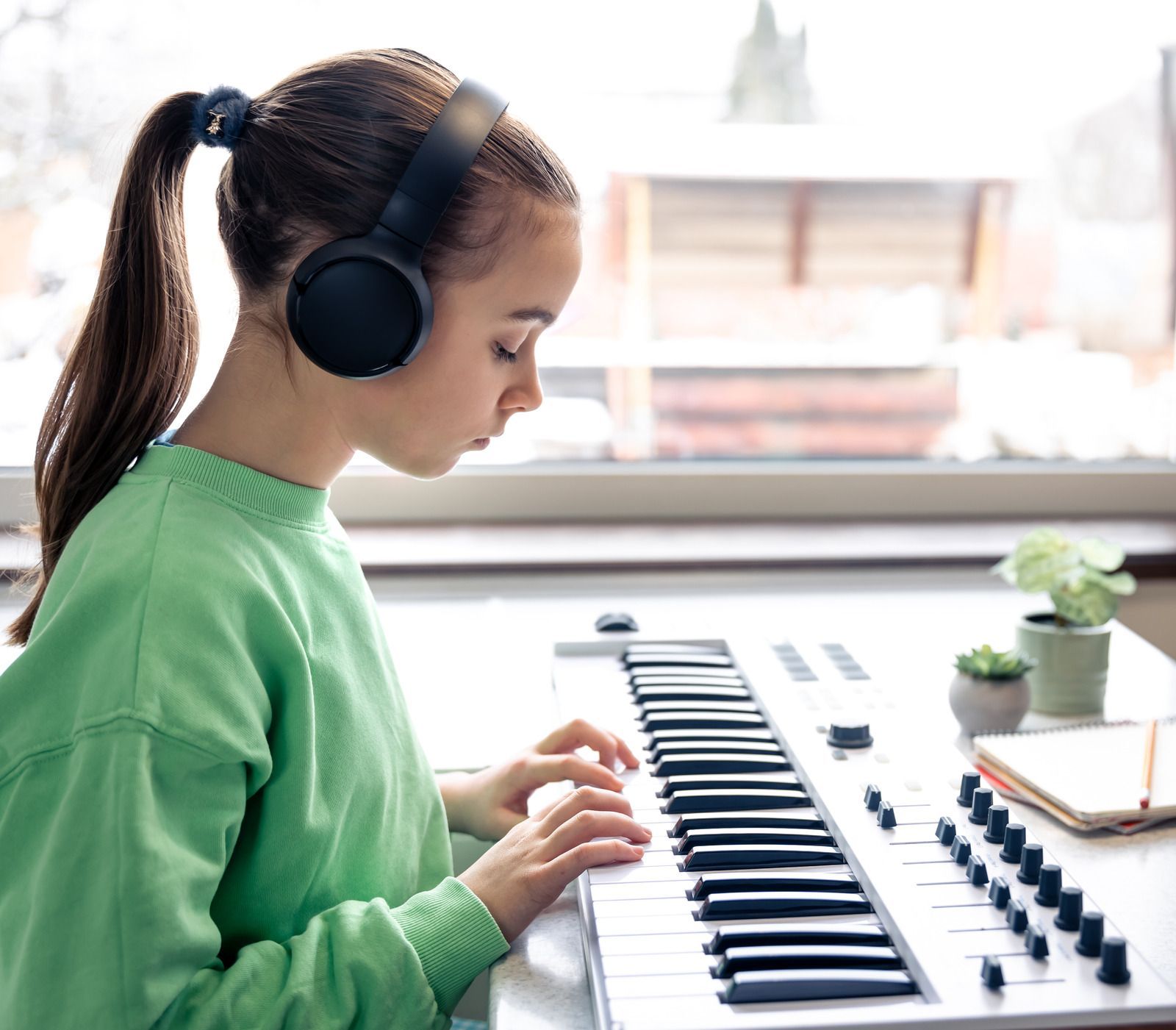
A phone works fine. Prop it up, hit record, play through a short passage, maybe sixty to ninety seconds, and stop. The temptation is to wait for perfect gear or a quiet room, but that wait usually means the recording never happens at all. Sound quality matters far less here than consistency.
Don't listen back immediately. Playing something back the second after you finish it tends to color the judgment, since the physical sensation of just having played is still fresh and gets mixed in with what the ears actually hear. Letting even a few hours pass, or listening the next day, tends to produce a more honest and useful listen.
For students working toward a recital, audition, or school ensemble tryout, a short recorded run-through a week or two beforehand does double duty: it catches nerves-driven mistakes while there's still time to fix them, and it gives a realistic preview of how the performance will actually come across to an audience rather than how it feels from the performer's seat.
Bringing This Into Lessons, Not Just Home Practice
A good instructor already builds self-recording into a student's practice routine as part of a structured, personalized teaching approach, because hearing a recording between lessons lets a teacher pinpoint exactly where a passage went sideways instead of relying on a secondhand description of "it wasn't working." For a young beginner, a parent can record a short clip after a practice session and share it with the instructor, turning next lesson's feedback into something specific rather than a vague check-in. For older students and adults working independently between sessions, self-recording closes a real gap: a lesson only runs thirty or sixty minutes, and a recorded practice session shows what's actually happening the other six days of the week.
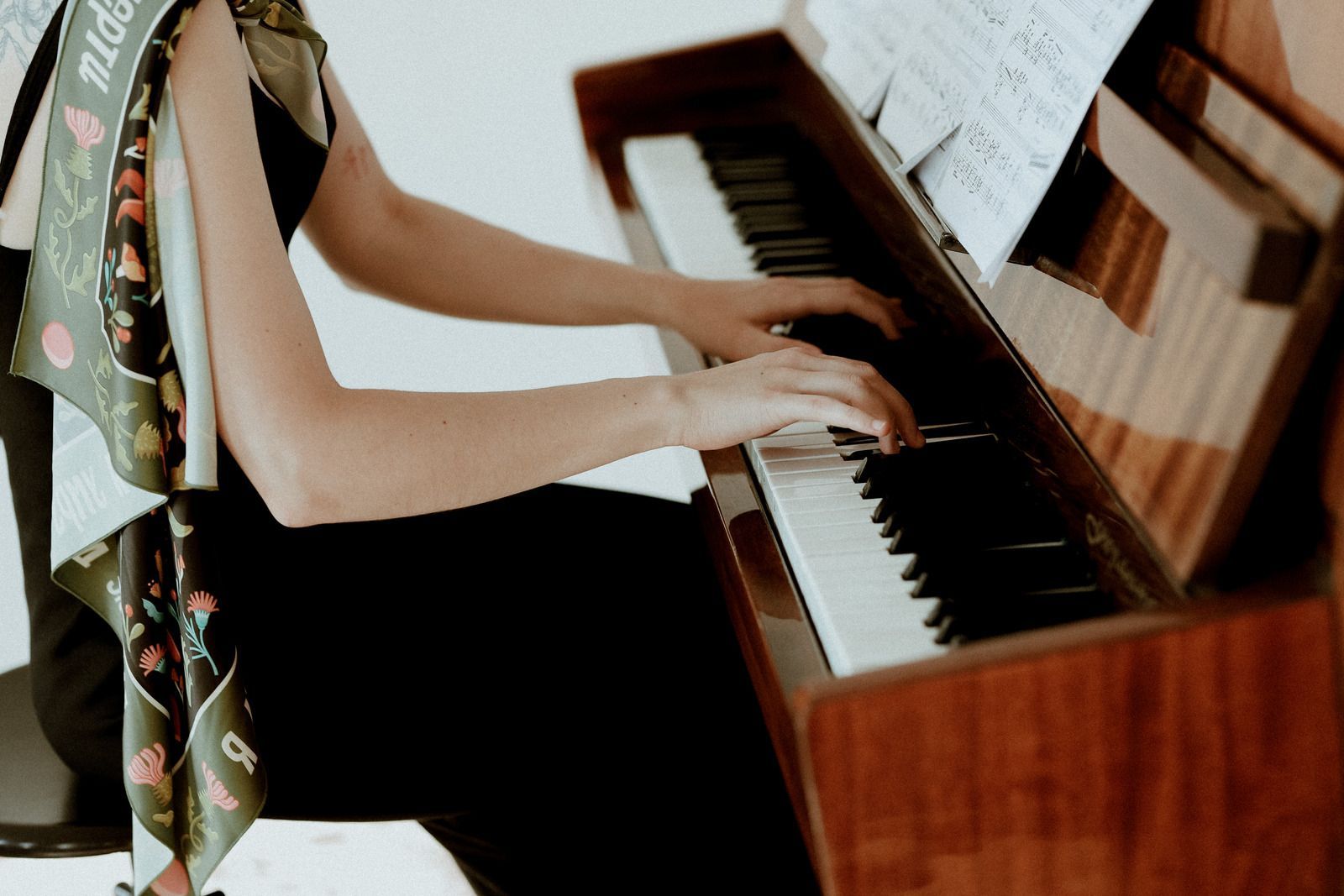
This works across every instrument, whether that's a young beginner puzzling out simple melodies on piano, a student building rhythm and technique on guitar or drums, or a vocalist working through breath support and pitch. The specific problem changes by instrument, but the value of hearing it clearly, away from the pressure of the moment, stays exactly the same.
Frequently Asked Questions
How often should I record myself practicing?
Record yourself every two to four weeks using the same short passage. This creates meaningful comparisons without overemphasizing daily fluctuations, helping you identify genuine improvements in technique, timing, tone, and overall musical confidence.
Should I record audio only, or video?
Both formats are useful. Audio helps you evaluate tone, timing, and intonation without distractions, while video reveals posture, hand position, movement, and physical technique that may influence how comfortably and accurately you perform.
My child hates hearing their own recordings. What should we do?
Keep recordings short and positive, focusing on one encouraging observation instead of several corrections. Comparing an older clip with a newer one can also help children recognize improvement and become more comfortable hearing themselves.
Isn't listening back to mistakes discouraging?
It can feel uncomfortable initially, but recordings should guide practice rather than encourage criticism. Focus on one issue at a time and compare recordings over several weeks to recognize progress instead of dwelling on mistakes.
Should beginners start recording from day one, or wait until they have more experience?
Beginners can benefit from recording from the beginning. Early clips create a valuable baseline, help establish consistent practice habits, and provide clear evidence of improvement as technique, confidence, musical understanding, and performance skills develop.
Do I need special equipment to get useful recordings?
No special equipment is necessary for regular practice tracking. A smartphone can capture enough detail to identify timing, tone, intonation, and posture issues. Better microphones become useful mainly for auditions or polished performances.
Turn Recordings Into Proof of Musical Growth
Self-recording gives musicians something everyday practice cannot: a clear way to hear change over time. A short clip can reveal details that disappear while playing, from uneven timing and inconsistent tone to stronger control and more confident phrasing. In Brooklyn, NY, students at Brooklyn Music Workshop can use this habit to make progress easier to recognize, understand, and build upon. With 25 years of experience, the studio encourages thoughtful practice habits that help students become more aware of how they sound.
The real value comes from consistency rather than perfect recordings. Listening back every few weeks creates a personal record of small improvements that might otherwise go unnoticed. Early clips become useful reminders of how far technique, musicality, and confidence have developed. Over time, recording becomes less about finding mistakes and more about developing an honest ear, making practice more purposeful, and giving musicians a lasting way to recognize the growth that happens one session at a time.